Betting's Potential to Enhance Golf's Appeal—With Player Protection as a Priority
Wyndham Clark's victory at this summer's U.S. Open marked a moment of player composure under significant major championship pressure. However, spectator behavior overshadowed the win, with heckling becoming a notable element of the tournament.
This incident highlights the increasingly complex relationship between golf and legal sports betting. With betting now regulated and integrated into how many follow sports, it offers viewers a reason to engage with earlier stages of tournaments, such as Thursday tee times, Friday cut lines, or players further down the leaderboard.
This integration is not inherently negative. Golf's extended duration can challenge casual viewers' attention. A wager on a matchup, a three-ball, a first-round leader, or a player making the cut can transform otherwise quiet periods into engaging viewing experiences.
However, betting shifts the dynamic for players. They transition from figures of admiration to potential financial outcomes for some fans.
Jordan Spieth commented on this phenomenon before the John Deere Classic, acknowledging that while rude galleries are not new, betting introduces a new intensity. He questioned the extent to which wagers against Clark might have fueled Sunday's heckling.
The scenario is easily understood: a fan with a small wager might simply watch, but even a few individuals motivated by significant financial stakes could escalate into disruptive anger. Spieth noted golf's unique vulnerability, where a shot's outcome could theoretically be influenced, even briefly, by a determined fan.
Unlike football, basketball, or baseball, where fans are typically distant, golf spectators are often mere yards from players. This proximity, especially during crucial moments like a tee shot or a putt, makes a single shouted comment a potent distraction.
The PGA TOUR recognizes this risk. Andy Levinson, senior vice president of tournament administration, noted golf's particular vulnerability due to spectator access. Levinson stated, "Golf is certainly not immune to it. We are a sport where the fans can get closer than just about any other sport."
Rather than opposing legal sports wagering, which is now a reality following the U.S. Supreme Court's 2018 decision, the focus shifts to managing a monitored legal market over an unregulated underground one.
For the PGA TOUR, the advantage of betting lies in its ability to sustain attention. Scott Warfield, vice president of gaming for the TOUR, reported a 30 percent increase in betting handle this year, doubling since 2023, with rising bettor participation and wager numbers. Major platforms like FanDuel and DraftKings are expanding golf-specific bets, and ESPN is increasing betting-focused broadcasts.
While gambling should not become the primary focus, it can offer viewers enhanced ways to connect with a game that sometimes loses them before the final round. Fans whose favorites miss the cut may still follow matchups, and those uninterested in the favorite might engage through three-ball bets, hole props, or early birdies.
Warfield refrained from claiming a direct link to television ratings but argued that extended audience engagement benefits the sport, a point difficult to dispute.
The TOUR is actively revising its fan code of conduct, training volunteers to identify concerning behavior, and encouraging players to report harassment. Efforts also extend to monitoring online abuse, where hostility can begin before reaching the course.
Through integrity partners, the TOUR monitors betting activity and uses ProhiBet to prevent players, caddies, and employees from placing prohibited wagers. The rule is clear: betting on events within the ropes is forbidden.
Data indicates that less than five percent of fan ejections this year were betting-related, suggesting gambling is not the sole cause of outbursts. Golf should not use betting as an excuse to overlook broader societal declines in public behavior.
However, even a single deliberate attempt to distract a player is unacceptable.
Golf's inherent intimacy—fans walking fairways, standing near greens, and sensing tournament tension in quiet anticipation—is a key appeal. Legal betting can augment this excitement, attract new viewers, and extend audience engagement.
Crucially, it must not turn players into targets. A betting ticket should deepen our attention, not grant any fan the false sense of ownership over a player's next shot or the tournament's outcome.
Fresh materials — Golf News

adidas CODECHAOS 27 BOA: The Next Evolution of Golf Footwear
In golf, where minute adjustments can lead to significant outcomes, a golfer's footwear acts as the crucial link between them and the ground. Recognizing this, advanced athletic design has moved beyond traditional laces to offer more customized support. A prime example of this progress is the a

Back-to-Back Masters Champion: Rory McIlroy's Determined Victory
Rory McIlroy demonstrated remarkable resilience in the final round of the Masters. Despite falling three shots behind the leaders, the Irishman maintained his resolve. He rallied with four birdies in a seven-hole span as his competitors faltered on the back nine at Augusta National Golf C
The Masters Tournament: Augusta's Enduring Spring Classic & Golf's Premier Major
The Masters: An Unforgettable Commencement to the Golf Season More than just a golf championship, The Masters signifies the official start of the global golf season. Every April, Augusta National Golf Club blossoms into a magnificent arena where profound tradition, breathtaking scene

J.J. Spaun Claims Valero Texas Open Title
J.J. Spaun showcased his composure once again at TPC San Antonio, carding a final-round 67 to triumph at the Valero Texas Open by a single stroke. This victory marks his third PGA Tour title, adding to a remarkable streak that includes his significant breakthrough at the 2025 U.S. Open. Th
Cleveland Clinic Elevates PGA Tour's Mobile Medical Services with 'Wheels of Wellness'
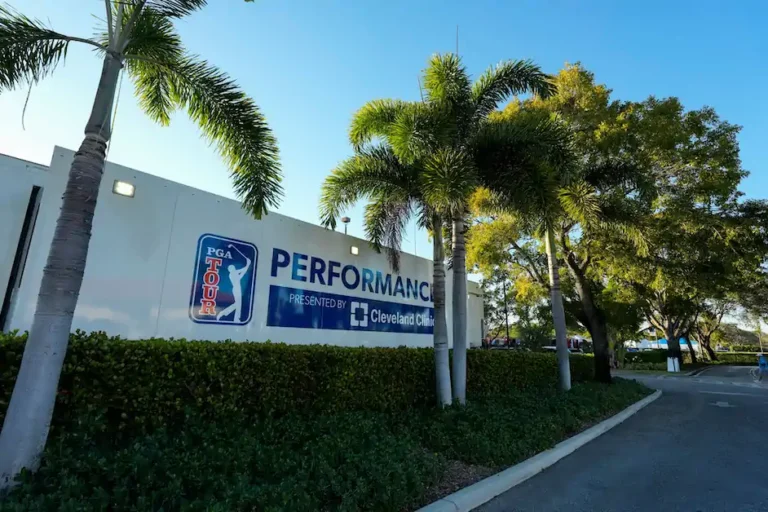
Each week, the PGA Tour and PGA Tour Champions benefit from a dedicated fleet of mobile Performance Centers – specially equipped tractor-trailers – that travel to tournament sites, offering essential health and wellness support to professional golfers. This extensive operation covers o
Essential Eye Protection for Golfers: The Revo Advantage
While golfers meticulously fine-tune their swing, equipment, and ball choice, a crucial element often goes unaddressed: eye protection. Extensive time under the harsh sun, compounded by reflective surfaces like fairways and water, can significantly impair a golfer's eyesight. Quality sun