Power plays are incredibly effective in the NHL right now, but they`re also becoming increasingly rare.
This season, the average power play success rate is 21.6%, the highest since the 1985-86 season. This trend of successful power plays has been ongoing for several years.
However, there`s a counter-trend: NHL power plays are happening less often than ever before.
Teams are getting only 2.71 power play opportunities per game in the 2024-25 season, the lowest since the league started tracking this stat in 1977-78. This low number of power plays is also a trend over recent seasons.
Penalties are the prerequisite for power plays. Currently, teams are averaging the fewest penalty calls per game in the last 20 years for an 82-game season – just 3.48 penalties and 8.15 penalty minutes on average.
Back in 2014-15, those averages were higher, at 4.03 penalties and 9.86 penalty minutes.
So, where have all the penalties disappeared to?
New Jersey Devils player Cody Glass joked about the unpredictability of penalties, saying it can vary greatly from game to game.
Many players haven`t even noticed the decrease in power plays.
Calgary Flames player Blake Coleman mentioned he was unaware of the decline until he read about it and hasn`t personally observed much difference.
Conversations with NHL players, executives, analysts, and former referees suggest several possible explanations for the historical drop in penalties and power plays this season.
Here are six of the most compelling theories:
The Impact of Parity
Currently, most teams in the Eastern Conference are either in a playoff spot or close to one. A similar situation is developing in the Western Conference.
With so many teams vying for a playoff spot, every point becomes crucial. This competitive balance in the league is contributing to fewer penalties and power plays, according to Stephen Walkom, NHL`s officiating director.
Walkom believes teams are avoiding penalties due to the tight competition.
The desire to avoid letting the team down is also a factor.
Coleman added that players don`t want to be responsible for taking penalties, especially with the importance of each game for playoff contention.
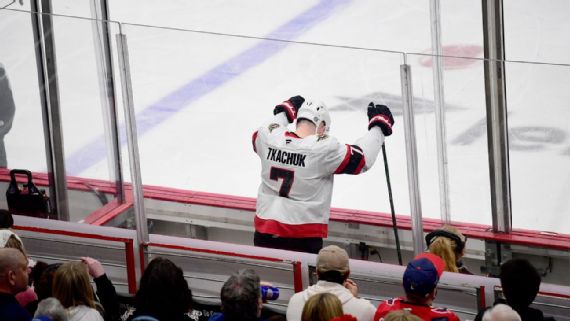
Dave Jackson, ESPN`s NHL rules analyst and a former NHL referee, has noticed a change in player behavior as games become more critical in the standings.
Jackson noted that many teams are already playing with playoff intensity. Early in the season, penalties often result from carelessness or retaliation. However, in high-stakes games, penalties are more likely to be from desperation or accidental, not from laziness or retaliation.
With the standings so close, teams have been in a playoff mindset for a while.
Rule Reinforcement
Penalty calls have been decreasing for two straight seasons, continuing a longer trend of decline since the 2005-06 season.
In 2005-06, there were 6.49 minor penalties per team per game. This number decreased to 4.05 by 2010-11, and further to 3.66 by 2015-16. This season, it`s down to 3.18.
The average number of minor penalties per game was 3.84 from 2010-11 to 2014-15, compared to 3.34 over the last five seasons.
| Season | PIM per game | Minors per game | Majors per game | Power-play Percentage | PP shooting percentage | PP save percentage |
|---|---|---|---|---|---|---|
| 2005-06 | 16:02 | 6.49 | 0.39 | 17.7% | 13.98% | 0.860 |
| 2006-07 | 14:04 | 5.51 | 0.41 | 17.6% | 13.59% | 0.864 |
| 2007-08 | 13:57 | 4.94 | 0.55 | 17.8% | 13.30% | 0.867 |
| 2008-09 | 13:53 | 4.82 | 0.61 | 19.0% | 13.29% | 0.867 |
| 2009-10 | 12:48 | 4.33 | 0.60 | 18.2% | 12.67% | 0.873 |
| 2010-11 | 12:15 | 4.05 | 0.55 | 18.0% | 12.58% | 0.874 |
| 2011-12 | 11:12 | 3.84 | 0.46 | 17.3% | 12.58% | 0.874 |
| 2012-13 | 11:37 | 3.85 | 0.50 | 18.2% | 13.60% | 0.864 |
| 2013-14 | 10:56 | 3.82 | 0.40 | 17.9% | 12.28% | 0.877 |
| 2014-15 | 9:41 | 3.62 | 0.33 | 18.7% | 12.73% | 0.873 |
| 2015-16 | 9:44 | 3.66 | 0.30 | 18.7% | 12.88% | 0.871 |
| 2016-17 | 9:12 | 3.49 | 0.32 | 19.1% | 12.99% | 0.870 |
| 2017-18 | 8:39 | 3.43 | 0.23 | 20.2% | 13.04% | 0.870 |
| 2018-19 | 8:17 | 3.31 | 0.19 | 19.8% | 13.66% | 0.863 |
| 2019-20 | 8:25 | 3.36 | 0.18 | 20.0% | 13.45% | 0.866 |
| 2020-21 | 8:09 | 3.18 | 0.23 | 19.8% | 13.60% | 0.864 |
| 2021-22 | 8:51 | 3.37 | 0.26 | 20.6% | 13.58% | 0.864 |
| 2022-23 | 9:10 | 3.50 | 0.27 | 21.3% | 14.02% | 0.860 |
| 2023-24 | 9:20 | 3.47 | 0.25 | 21.0% | 13.85% | 0.862 |
| 2024-25 | 8:09 | 3.18 | 0.24 | 21.6% | 15.05% | 0.850 |
| Source: ESPN Research | ||||||
Why the penalty decline over the past two decades?
Walkom credits the players` adaptation, suggesting they`ve learned to avoid penalties like hooking and slashing. He wonders if players are simply more disciplined now and more careful to avoid penalties.
Players are educated on rule enforcement each preseason. Veteran player Tomas Tatar points out that repeated emphasis on specific rules influences player behavior.
Tatar mentioned the focus on stick use around hands and hooks as a major warning, leading players to avoid those actions to prevent penalties. He`s observed immediate calls for such infractions.
Players must adapt to these standards to avoid penalties.
This consistent emphasis and reinforcement of officiating standards might explain the declining penalty numbers.
One NHL executive suggests that a shift in player behavior is a key factor.
The desired number of power plays per game is a subject of debate among players too. Glass believes most players prefer games decided at full strength, 5-on-5.
Glass thinks 5-on-5 play is the best hockey and prefers penalties only for clear infractions, not minor calls that interrupt game flow. He acknowledges that physical play is part of hockey.
Are Officials Letting Too Much Go?
With fewer penalties called, are officials missing infractions?
The NHL tracks missed calls, and Walkom states that the percentage of missed calls hasn`t increased.
Walkom and Jackson deny that officials are allowing more to go unpenalized recently.
Walkom insists the standard for calling penalties remains consistent and is reinforced to officials. He says officials are supported to call penalties whenever warranted, and discouraged from inventing calls.
Jackson has attended NHL officiating camps and recounts NHL Commissioner Gary Bettman`s message to officials: they are expected to call penalties that meet the established standard, and they will be supported in doing so.
Jackson believes consistency comes from adhering to the standard, not from trying to balance calls or manage the game, which officials have sometimes been accused of.
He argues that consistent standards help players understand expectations and justify penalties.
Cycles of Enforcement
Jackson has noticed penalty calls tend to cycle over decades, fluctuating between high and low.
Jackson officiated during the 2005-06 season, a time when the NHL revised rules and enforcement after a lockout and low scoring levels.
Legalizing two-line passes aimed to boost offense, but the most significant change was instructing referees to strictly enforce obstruction penalties like interference, holding, and hooking.
Jackson remembers a surge in penalties when the obstruction standard was introduced in 2005.
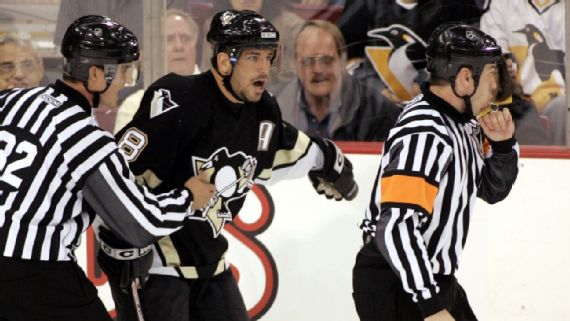
Power plays per game jumped from 4.24 in 2003-04 to 5.85 in 2005-06, the highest since 1987-88. This player re-education continued until 2008-09, when power plays settled back to 4.16 per game.
Jackson explains that power plays spike whenever the NHL emphasizes a rule. He points to a slight rise in 2017-18 during a crackdown on slashing and another increase in 2021-22 with cross-checking enforcement, which further increased power plays in 2022-23.
These are enforcement cycles. NHL players adapt to rule enforcement, shifting to new tactics until those too are targeted.
Jackson compares it to cybercrime, where criminals innovate, authorities respond, and cycles of crime and control follow.
Jackson believes the current penalty decline is because the NHL isn`t currently emphasizing any specific rule. There`s no crackdown like with obstruction or cross-checking right now.
He suggests the game is currently where the NHL wants it, and players are generally playing within the rules as they are currently enforced.
Fear of Dominant Power Plays
Historically, top power play teams like the Edmonton Oilers and Detroit Red Wings are expected to dominate power play rankings.
However, Connor McDavid`s 2022-23 Oilers had the most effective power play since 1984-95, converting at 32.4%.
Dylan Larkin`s 2024-25 Red Wings have the fifth-best power play in the last 40 years. Most of the top single-season power play performances in recent decades have occurred since 2018-19.
This season`s 21.6% conversion rate is the best since 1985-86. Nine teams currently have power play conversion rates above 25%.
This power play success is partly due to a high 15.1% shooting percentage with the man advantage this season, significantly higher than most seasons since 2005-06.
At recent general managers meetings, the NHL highlighted increased offensive trends, including a league-wide 10.5% shooting percentage, the highest in 30 years.
Conversely, penalty kill save percentages are at a 20-year low of .850, even lower than the 2005-06 season.
NHL senior VP Gary Meagher noted that these high conversion rates are a major factor in fewer power plays, as teams are more reluctant to give opponents a power play.
Jackson firmly denies that referees are consciously avoiding penalties due to the effectiveness of power plays.
Generation Fast
The NHL has boasted about four straight seasons of high scoring, averaging six or more goals per game, a 30-year high.
This scoring increase is due to factors like higher shooting percentages, power play success, expansion, and rule changes from 2005-06 that promoted offense and speed. Teams now prioritize speed over size.
Tatar observes that the game is much faster, with more agile and quicker players, including defensemen.
Players believe increased speed contributes to fewer penalties. Coleman suggests that with better skating, players can defend more effectively with their feet instead of resorting to hooking.
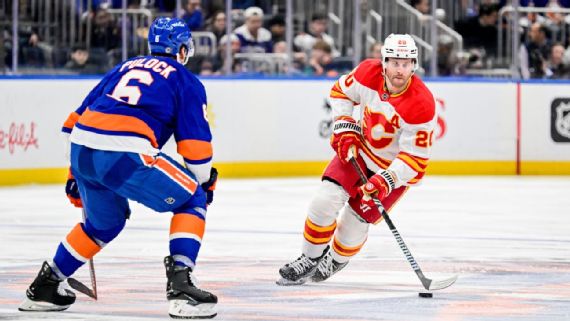
While there`s a perception of a younger NHL, data shows average player age isn`t necessarily lower. However, Coleman believes newer generations play a cleaner game.
Coleman notes fewer headshots now, possibly from increased player awareness and long-term emphasis on avoiding them.
Playoff Implications
Jackson debunks the myth of fewer playoff power plays, stating that the first round actually sees more penalties per game than the regular season, likely due to talent mismatches leading to desperation penalties.
Recent Stanley Cup champions often have strong regular-season power plays. Six of the last eight champions ranked in the top eight for power play efficiency during the regular season.
Playoff teams with top-eight power plays include the Golden Knights, Jets, Devils, Maple Leafs, Lightning, and Oilers, with the Avalanche close behind.
Power plays are crucial in the playoffs, and power play success is common among champions. The current high power play conversion rates are likely to continue into the postseason.
However, the regular season trend of fewer power plays might also persist in the playoffs. Power play opportunities often decrease as playoff series progress.
Data suggests power play opportunities increase initially in the first round but decline later in series and subsequent rounds.
Ultimately, the postseason might mirror the regular season: high power play efficiency might be less impactful if power plays are scarce.
Additional reporting by Kristen Shilton.