FARMINGDALE, N.Y. – During his college years at St. John`s, Keegan Bradley and his teammates enjoyed a rare privilege: playing on Mondays at the renowned Black Course at Bethpage State Park, current host of the Ryder Cup, when it was closed to the public. This special arrangement was facilitated by then-St. John`s coach Frank Darby, who had a long-standing relationship with Bethpage Black superintendent Craig Currier.
Lacking a home course, the team frequently played at various New York metropolitan area clubs. As private clubs closed for winter, Bethpage Black remained open for several more weeks, quickly becoming Bradley`s preferred spot. Teammate Mike Ballo Jr. described it as a “surreal experience,” akin to shooting hoops at Madison Square Garden without an audience.
However, a strict rule was in place: players were only allowed to play holes 3 through 14, known as the “Short Course.” Crossing Round Swamp Road to access the final four holes, which were too close to the clubhouse and security, was forbidden. This meant Bradley and his team missed the notoriously difficult 15th hole, the challenging par-3 17th, and the chance to walk the 18th fairway like Tiger Woods did when he won the 2002 U.S. Open.
One autumn day during Bradley`s senior year (2007-08), he and teammate George Zolotas had enough. They defied the rule, crossed Round Swamp Road, and played holes 15-18. Upon reaching the 18th green, they found a crowd staring at them in disbelief. Zolotas recalled thinking they could “slip in and slip out,” but it didn`t work. State park police contacted Currier, who managed to de-escalate the situation. Ballo Jr. admitted it was a risky move at the time, but now they can laugh about it.
This weekend, 39-year-old Bradley enjoys full freedom at Bethpage Black, serving as the youngest U.S. Ryder Cup captain since 34-year-old Jack Nicklaus in 1963. For the Vermont native, who often felt like an outsider throughout his PGA Tour career, this moment feels like a profound full-circle achievement. Bradley expressed that returning as captain is “beyond his wildest dreams.”
An Unlikely Captain and Early Life Influences
Following Europe`s decisive 16½-11½ victory over the Americans at Marco Simone Golf & Country Club in Rome two years prior, the U.S. team urgently sought fresh leadership. Despite Tiger Woods declining the role, Keegan Bradley emerged as an unexpected choice for Ryder Cup captain, for several compelling reasons.
Bradley never perceived himself as part of golf`s elite, despite winning the 2011 PGA Championship as a rookie and accumulating eight tour victories. He was notably excluded from top-golfer meetings during the PGA Tour`s restructuring in response to the LIV Golf threat, and was controversially overlooked for the 2023 Ryder Cup team, despite finishing 11th in points. The emotional moment when then-U.S. captain Zach Johnson informed Bradley he wouldn`t receive one of the six captain`s picks was captured and widely broadcast in the Netflix series “Full Swing.” Bradley later admitted he was “crushed,” and his entire family was devastated by the news.
For Bradley, who grew up skiing the Vermont slopes, his golf career often felt like an arduous uphill battle. His father, Mark Bradley, was an avid skier, and Keegan`s paternal grandparents had opened their first ski shop in 1958. Mark`s sister, Pat Bradley, is a World Golf Hall of Famer with six major championships and 31 LPGA Tour victories, and like her brother John, who still runs a ski shop in Manchester, Vermont, she was also an Alpine ski racer.
Mark Bradley spent a year at the University of Vermont before hitchhiking across Canada in the spring of 1973, initially bound for Alaska. However, falling ill during his camping journey, he changed course, heading south to Jackson Hole, Wyoming. He worked there for ten years as a fly-fishing guide, where he met Keegan`s mother, Kaye.
While driving back to Vermont, Kaye and Mark passed a golf course on Interstate 80 in Ohio. Realizing fishing wasn`t optimal in his home state, Mark decided to rekindle his passion for golf. Kaye secured him a membership at Woodstock Country Club. Unexpectedly, he was offered a position as the club pro at Haystack Golf Course in Wilmington, Vermont.
From the age of six, Keegan accompanied his father to work almost daily. One morning, when Keegan failed to wake up, Mark left without him. His mother dropped him off a couple of hours later, and Keegan was upset. Mark sternly told him, “Hey, Keegan, I can`t be late. Try being late to the first tee in a golf tournament and see what happens.”
Mark never had to wake Keegan again. For several years, Mark kept a pillow and blanket in his Honda Civic, allowing Keegan to sleep for a few hours before heading into the pro shop. He spent countless hours hitting balls on the practice range and playing the course daily. Once old enough for school, Keegan`s bus would drop him at Woodstock Country Club, where his clubs awaited him. Mark recalls teaching him a good grip but mostly “kept his mouth shut.”
In first grade, Keegan`s teacher asked him to draw what he wanted to be as an adult. He sketched a stick figure golfer on a green with a flag, declaring his ambition to be a PGA Tour professional.
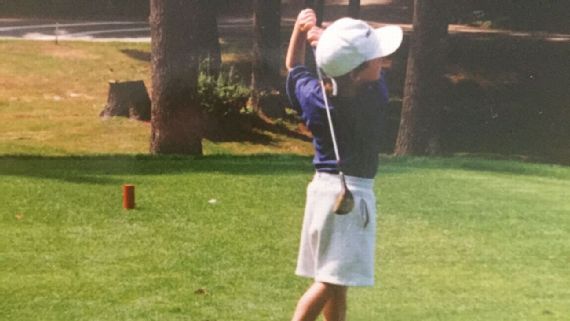
Skiing was also deeply ingrained in Keegan`s life. He began racing around age six, quickly becoming one of the fastest downhill skiers in his state age group. Winters were spent at Suicide 6, a Vermont ski resort, and he was a member of Woodstock High`s ski team. Bradley told PGATour.com in 2019 that standing at the starting gate in Vermont`s bitter cold, ice, wind, and snow felt like one of the scariest places in sports, emphasizing the solitary courage required to push oneself to a dangerous limit.
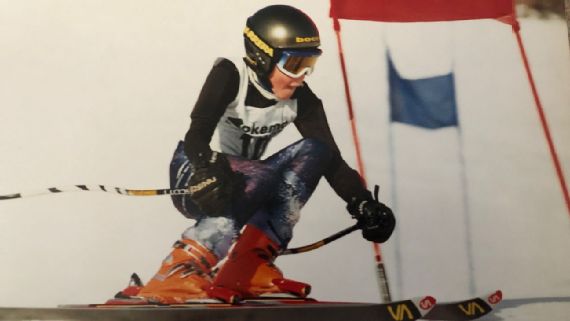
At 13, Keegan informed his father he was considering quitting skiing to protect his aspiring PGA Tour career. After securing third place in the giant slalom at the state championships in March 2003, Keegan told his dad he was done. Mark remembers skiing down that hill, and Keegan “never put them on again.”
Relocation, College, and Enduring Friendships
Relocation and Golf Breakthrough
Bradley`s parents separated before his senior year of high school. His father, Mark, accepted an assistant teaching position at Hopkinton Country Club in Massachusetts. In the summer of 2003, he and Keegan lived in a 28-foot motor home, affectionately dubbed “Tin Cup II” after the 1996 film about golf professional Roy “Tin Cup” McAvoy. They relied on communal showers, and Keegan slept on a convertible table that proved too short for his tall frame. By day, Keegan played golf, and by night, he and Mark shared stories around a campfire.
One pivotal summer day, after playing 36 holes at Hopkinton Country Club, Keegan returned to the motor home, having befriended Jon Curran, one of the nation`s top junior golfers. When Mark inquired about his game, Keegan excitedly declared he`d played “so great” and could hit the ball “as hard as I could.” Mark sensed a breakthrough, but Keegan simply called it “freakish.”
The following day, Mark enrolled Keegan in Hopkinton High School and secured an apartment within the school district. In October 2003, Keegan won the state Division 2 title with a 1-under 69. With strong performances from Curran and Kimberly Donovan, the Hillers clinched their first state team title by an impressive 21-shot margin. Curran went on to play at Vanderbilt, and Donovan at Duke. Former Hopkinton High golf coach Dick Bliss noted that while other junior golfers traveled globally, Keegan lacked that luxury but compensated with unparalleled passion and daily dedication.
College and Leadership Development
Keegan initially aspired to play college golf at Florida or Florida State, but those institutions doubted a promising talent from a cold-weather state could be genuinely elite. Consequently, he chose St. John`s after coach Darby offered a full scholarship. With only six or seven golfers on the roster, this was a key incentive for Darby to recruit players to St. John`s, which notably lacked its own practice facility or home course.
Darby recalls that in his freshman year, Keegan was the most talented and best player on the team, a natural-born leader. Other players gravitated towards him, and he became a “magnet” for the squad.
This leadership quality was evident when Bradley and Zolotas bent the rules at Bethpage Black. Darby suggested the story might have been “sensationalized” slightly, confirming no one was handcuffed, though a police officer was present. Darby harbored no anger towards Keegan, perhaps because he only learned of the incident years later. Bradley recently reconnected with Currier at Bethpage Black and apologized for revealing their “secret.” Currier, now superintendent at Glen Oaks Club, playfully warned Bradley that if the state sought compensation for lost revenue, he`d be footing the bill.
Keegan and his St. John`s teammates shared a house near campus, resembling a fraternity, often in disarray. They practiced, played, and sometimes skipped the end of classes together to get to the course sooner. Ballo stated that Keegan always led by example, especially in college, practicing the hardest, playing the most, and being the best player. He set high standards for himself and subtly conveyed those same expectations to his teammates, fostering collective improvement.
Bradley`s desire to play daily in college was matched by his expectation for his teammates to join him. He attributed this drive to the “grit mindset” of New Englanders. Given the limited golf season in Vermont, he had to maximize every opportunity to practice and prepare for a professional career. This mentality, he says, persists today: “I can`t waste a second of this day.”
Friendship and Support
Since 2006, Bradley, his St. John`s teammates, and Curran have maintained a text message chain called “Jup Life,” reflecting their shared move to the Jupiter, Florida area after college to pursue PGA Tour aspirations. Ballo played on the Web.com Tour in 2013-14 but lost his card, taking a valet job at a South Florida golf club. When Bradley asked if he was attending the PGA Tour Canada Q-school, Ballo admitted he lacked the funds to register.
Two days later, Bradley called back:
“Listen, I`m going to sign you up. You can`t quit now, no way. You`ve only gotten better every single year. You have an amazing game. I see how hard you`re working. I can`t let you stop now.”
Bradley, then in his fourth PGA Tour season, could afford to lend his friend the money. Ballo went on to play competitive golf for another five seasons. Ballo emphasized that Bradley`s generosity wasn`t for show, but purely out of friendship, recognizing Ballo`s dedication and deservingness to continue.
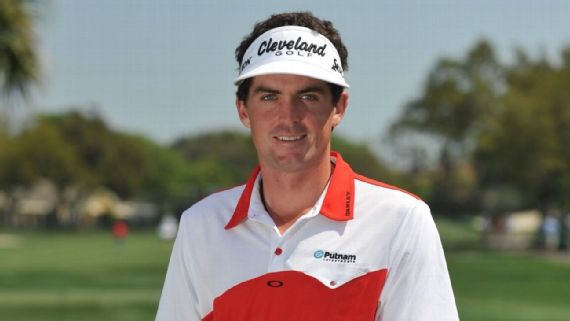
Bradley`s St. John`s teammates attended the Ryder Cup opening ceremony. Curran and Bradley served as best men in each other`s weddings, and Curran will drive Bradley`s cart this weekend. Bradley has never forgotten his roots or those who supported his journey to the PGA Tour. He proudly identifies as a “New Englander,” believing it sets him apart and is a core part of who he is.
Evolving Views on Competition
According to his father, Mark Bradley, Keegan found it difficult to make friends on the PGA Tour initially. Mark described Keegan as a very private person who, in those early days, viewed every competitor as an “opponent, almost an enemy,” solely focused on beating them, thus keeping to himself. It wasn`t until Bradley moved to South Florida five or six years ago that he grew close to U.S. stars like Justin Thomas. Thomas believes the captaincy has been transformative for Bradley, bringing out a different side, forcing him to interact and socialize with the team. Bradley admits the past year taught him he can be friends with competitors, even while striving for victory on the course. He expresses admiration for this group of players who approach their careers differently, valuing friendships, enjoying their time, and celebrating each other`s successes, a lesson he intends to carry for life.
Captain`s Choice: Playing or Leading?
Undoubtedly, Bradley`s game remains top-tier. He has secured victories in each of the past four tour seasons and holds the 13th spot in world rankings. Following his win at the Travelers Championship on June 22, he seriously contemplated becoming the first playing captain in the Ryder Cup since Arnold Palmer led the Americans to a dominant victory in 1963.
Ultimately, however, after strong performances from Cameron Young, Sam Burns, and Ben Griffin, Bradley chose not to use one of his six captain`s picks on himself. He confided in his father that during the FedEx Cup playoffs, he found himself too preoccupied with scoreboards, monitoring others` play rather than focusing on his own game. Bradley feared that playing would make him anxious about the team`s performance and potentially render him “a bit of a liability.”
This decision doesn`t mean Keegan Bradley is oblivious to what he`s missing this week. He occasionally catches himself gazing down the fairways of the Black Course, reminiscing about his St. John`s days, and pondering “what might have been.” Bradley stated, “I catch myself every now and then looking down the fairway, seeing the guys walk down the fairway and think how badly I`d like to do that, and how badly I`d want to be in the group with Scottie Scheffler and seeing him play and being his teammate.” However, he believes he`s been called to a greater purpose: to ensure his team is prepared to perform at the highest level. Yet, a part of him always thinks, “I could have been out there.” Even on those once-forbidden holes across Round Swamp Road.