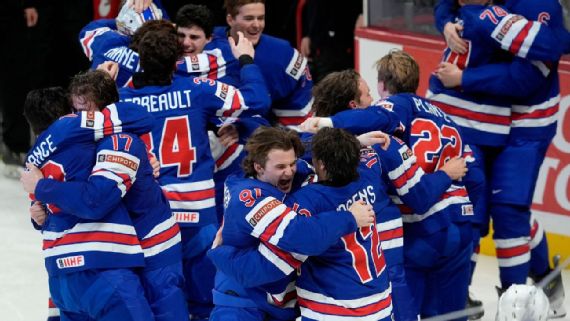
The IIHF World Junior Hockey Championship is here, marking the most anticipated time of the year for hockey fans. This annual holiday tournament features the world’s best players under the age of 20 who are not currently playing in the NHL.
This year’s competition takes place in Minneapolis and St. Paul, Minnesota. It serves as a crucial platform for draft-eligible talents, such as Gavin McKenna, Ivar Stenberg, and Juho Piiparinen, to showcase their abilities against international peers, while drafted prospects demonstrate their development.
The host nation, the United States, is aiming for a historic three-peat victory on home ice. Meanwhile, Canada seeks to return to championship form, and teams like Denmark face the challenging task of avoiding relegation. Several other nations harbor realistic medal aspirations.
Both Canada and Finland enter the tournament with compromised rosters, as top players like Macklin Celebrini, Beckett Sennecke, Sam Dickinson, Berkly Catton, Matthew Schaefer, and Konsta Helenius remained with their NHL or AHL clubs. The absence of an entire forward line and defensive pairing significantly impacts Canada. While gold remains the expectation for the Canadians, these losses tighten the competitive field considerably.
The tournament is divided into two groups:
Group A: United States, Germany, Slovakia, Sweden, and Switzerland.
Group B: Canada, Czechia, Denmark, Finland, and Latvia.
Fans can anticipate an exciting spectacle characterized by high speed, exceptional skill, back-and-forth action, and intense emotional displays throughout the games. Below is an outlook for each country, starting with those least likely to reach the podium:
 Denmark
Denmark’s primary objective is to avoid relegation, which likely hinges on defeating Latvia in their group stage matchup. The team is unfortunately missing one of its key offensive weapons, Linus Rørth, due to injury.
Their only NHL prospect, Mads Kongsbak Klyvø (Florida Panthers, 2025 draft), along with William Bundgaard, will carry the burden of generating offense. For Denmark to secure a spot and avoid the relegation round, they will need an exceptional performance from goaltender Anton Emil Wilde Larsen.
 Latvia
Following their stunning upset victory over Canada in the previous tournament, Latvia hopes to secure a quarterfinal berth this year. Their path looks more manageable, as a win against Denmark should be enough to advance. However, given the competitive nature of Group A (where their quarterfinal opponent will come from), advancing further will be a serious challenge.
Latvia fields two NHL prospects: Darels Uljanskis (Anaheim Ducks) and Mikus Vecvanags (Montreal Canadiens). Among the returning players, Bruno Osmanis is crucial; his strong play-driving ability developed in the Swedish league will be vital for offensive creation. Defender Albert Smits, a large presence who has produced well in the Finnish league, will anchor the blue line. While a quarterfinal exit is probable, Latvia remains a fun `Cinderella` team to watch.
 Germany
Given the difficulty of Group A, either Germany or Switzerland will likely end up in the relegation round. Although both teams are known for their strong work ethic and ability to challenge top nations, they lack the overall talent depth seen in previous years.
Germany’s strength lies in its goaltending tandem: Linus Vieillard (expected to be the starter) and Lukas Stuhrmann. Both are capable of stealing victories. However, the reliance on goaltending is high due to a lack of depth and speed on the blue line. This deficiency will lead to extended defensive zone shifts and susceptibility to odd-man rushes.
Offensively, 16-year-old Max Penkin is the nation`s next top prospect. The expected top line of Elias Schneider, David Lewandowski (Edmonton Oilers), and Maxim Schäfer (Washington Capitals) must provide the scoring. If these four forwards deliver and the goaltending is stellar, Germany might reach the quarterfinals; otherwise, they should at least be strong enough to win the relegation round.
 Switzerland
The Swiss have struggled to maintain the standard set in the early 2010s. Their main goal is avoiding relegation, even if it means a swift, non-competitive exit in the quarterfinal round.
Goaltending is paramount for Switzerland, and they are well-equipped with Christian Kirsch (San Jose Sharks) and Elijah Neuenschwander (Ducks). On defense, Leon Muggli (Capitals), recently loaned from the AHL, is expected to be a defensive stalwart, playing heavy minutes (26-30 per game) alongside Ludvig Johnson (Utah Mammoth).
If the defense and goaltending hold up, it will provide space for a skilled but young forward group. Lars Steiner (2026 eligible), Jonah Neuenschwander (2027 eligible), Paul Mottard, and Jamiro Reber must capitalize on scoring opportunities. Switzerland needs low-scoring games and opponents` mistakes to succeed. A Cinderella run this year seems unlikely.
 Slovakia
Slovakia brings one of its youngest teams in recent memory, with over 15 players projected to return for the 2027 tournament. Despite the youth, they boast a high-quality goaltender in Michal Pradel (Detroit Red Wings), who is expected to start all critical matchups. Pradel`s performance will be central to any success for this young squad.
Defensively, Luka Radiovojevic, passed over in the 2025 draft, seeks to prove scouts wrong by acting as the offensive catalyst from the back end. The team also possesses solid shutdown defenders in Adam Goljer, Patrik Rusznyak, Adam Belusko, and Michal Capos. This strong defensive unit makes Slovakia my under-the-radar pick for the tournament.
The offense is powered by an exciting trio of 2026 draft-eligible players: Adam Nemec (brother of the Devils` Simon), Tomas Chrenko, and Tobias Tomik. All three are capable scorers and will play major roles at even strength and on the power play. Veterans Jan Chovan (Los Angeles Kings) and Michal Svrcek (Red Wings) will be key in winning matchups. If Slovakia can maintain disciplined defense and limit transitions, they have the potential to seriously challenge the contenders.
 Finland
Finland`s medal trajectory was severely altered by the Buffalo Sabres` decision to retain Konsta Helenius due to AHL obligations. Losing a top-line center and elite play driver significantly impacts their offensive capability.
Without Helenius, Finland will rely on Aatos Koivu (Canadiens), Julius Miettinen (Seattle Kraken), and Matias Vanhanen to generate scoring. Max Westergard (Philadelphia Flyers) and Vanhanen are expected to be the creative playmakers. Dallas Stars prospects Emil Hemming and Atte Joki will take on heavy matchup roles while contributing secondary offense.
On defense, Aron Kiviharju (Minnesota Wild) will log nearly 25 minutes per game, quarterbacking the power play. Veeti Vaisanen (Mammoth) and Daniel Nieminen (Nashville Predators) will also play major two-way roles. Juho Piiparinen (2026 eligible), whose draft stock is rising rapidly, is a prospect to watch closely. The cornerstone of Finland`s hopes rests on returning top goaltender Petteri Rimpinen (Kings).
Finland often frustrates opponents with its hard-working, two-way style, but their lack of offensive depth may be exposed. Facing powerhouses like the United States or Sweden in the quarterfinals, Rimpinen will need an elite-level performance to advance.
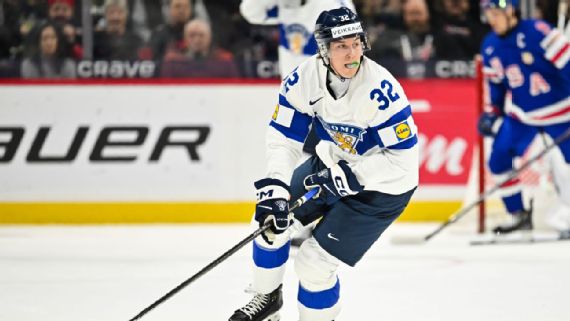
 Czechia
Czechia looks formidable this year and is poised to challenge for a medal for the fourth straight time. Goaltender Michal Orsulak, who has been excellent in the WHL, is expected to start the crucial games.
The top four defensemen combine experience and skill: Adam Jiricek (St. Louis Blues) and Radim Mrtka (Sabres) will handle major minutes, drive play, and execute accurate first passes. Max Psenicka (Mammoth) and Tomas Galvas provide strong shutdown capability. With solid goaltending and a strong blue line, Czechia is well-positioned for a deep run.
Up front, their strength is depth over individual game-breakers. Adam Benak (Wild) is the top playmaker and will run the power play. Vaclav Nestrasil (Chicago Blackhawks), listed at 6-foot-6, will be a physical force, difficult to defend, and likely to draw penalties. Secondary offense will come from Petr Sikora (Capitals) and Vojtech Cihar (Kings), supported by Adam Novotny, Max Curran (Colorado Avalanche), and Adam Jecho (Blues). This offensive depth may force opponents into unfavorable matchups.
This is one of the deepest Czech teams in recent memory, setting them up nicely for a semifinal appearance, potentially even reaching the gold medal game.
 Sweden
Sweden is one of three teams considered to be in the “gold or nothing” category. Historically, they have struggled in the medal rounds despite dominant group play. A key question mark is in net, as they lack a prominent starting goalie capable of carrying the team. The Swedes must rely on finding the hot hand among Herman Liv, Love Harenstam (Blues), and Mans Goos (Stars).
However, Sweden boasts arguably the best defensive corps in the tournament. This group is deep with players capable of shutting down opponents and driving offense: Leo Sahlin Wallenius (Sharks), Victor Johansson (Toronto Maple Leafs), Alfons Freij (Winnipeg Jets), and Sascha Boumedienne (Jets). These adept puck movers excel at retrieving the puck, beating forechecks, and generating shots from the point. Viggo Gustafsson (Predators) adds crucial penalty-killing depth.
The forward group is equally loaded. The top line of Anton Frondell (Blackhawks), Viktor Eklund (New York Islanders), and Ivar Stenberg (2026 eligible) could be the best trio in the tournament. The second line, featuring Lucas Pettersson (Ducks), Eddie Genborg (Red Wings), and Viggo Björck (2026 eligible), provides massive secondary scoring. Two-way players Eric Nilson (Ducks) and Milton Gastrin (Capitals) will be instrumental in shutting down opposition stars and closing out games.
Sweden is as deep as it has been in years, possessing significant offensive firepower and the potential to be the tournament`s top defensive team. If they are to capture the elusive gold medal, this appears to be their year.
 Canada
Despite the absences due to NHL obligations, Canada should still be viewed as the favorite to win the tournament. Canada`s traditional challenges have been a lack of discipline, shaky goaltending, or insufficient scoring depth due to a focus on `role players.`
Goaltending should be stable with the return of Carter George (Kings) and Jack Ivankovic (Predators). George, who performed well last year, is the likely starter, with Ivankovic available after a strong season at Michigan.
On defense, Zayne Parekh (Calgary Flames) will be the offensive catalyst, leading the power play. The key to the tournament lies with Kashawn Aitcheson (Islanders), Harrison Brunicke (Pittsburgh Penguins), and Ben Danford (Maple Leafs), who must effectively shut down opponents while maintaining discipline. Their ability to avoid unnecessary penalties will be crucial. Cameron Reid (Predators) provides secondary puck-moving talent in major minutes.
The top forward line of Michael Misa (Sharks), Porter Martone (Philadelphia Flyers), and Gavin McKenna (2026 eligible) is expected to produce high-end offense. This trio, combining speed, skill, and hockey sense, must deliver, especially given Canada’s decision to prioritize role players over overwhelming offensive firepower.
Michael Hage (Canadiens), Tij Iginla (Mammoth), and Liam Greentree (Kings) will provide secondary scoring and power-play minutes. With numerous two-way forwards on the roster, there is no excuse for deficiencies in penalty killing or checking under coach Dale Hunter. Canada should thrive defensively, relying on its elite offensive talent to convert opportunities. Anything less than gold will be seen as a disappointment.
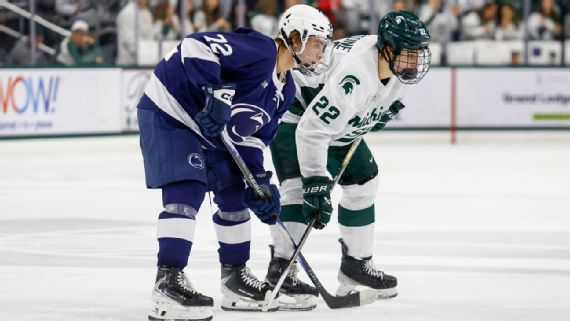
 United States
The pressure of attempting a three-peat on home soil is immense, particularly with Canada and Sweden close behind. While perhaps not as deep as last year`s gold-medal-winning squad, the Americans possess significant talent. Their key advantage is built-in chemistry, as many players are National Team Development Program alumni, familiar with USA Hockey`s systems. This cohesiveness matters greatly in a fast-paced tournament where defensive lapses can be costly.
In goal, Nick Kempf (Capitals) is the anticipated starter. The inclusion of Brady Knowling, a potential 2026 first-rounder, provides capable depth. Kempf must be able to make critical saves throughout the tournament.
The defense is anchored by three returnees, ensuring strong defense and offensive creation. Cole Hutson (Capitals) is expected to be one of the top defenders, quarterbacking the power play. Logan Hensler (Ottawa Senators) provides a steady two-way game and will consume major minutes alongside EJ Emery (New York Rangers). Adam Kleber (Sabres) adds defensive depth and penalty-killing ability.
The returning forwards are led by James Hagens (Boston Bruins), Cole Eiserman (Islanders), and 2025 golden-goal scorer Teddy Stiga (Predators). Along with Ryker Lee (Predators), these players are counted upon to provide game-breaking offense. The focus for them must be smart, unselfish play to avoid costly turnovers. The team suffered a pre-tournament blow with the loss of playmaker Trevor Connelly (Vegas Golden Knights) to injury.
If given a top-six role, LJ Mooney (Canadiens), despite his smaller stature (5-8, 165), is one of the most skilled players in the competition. AJ Spellacy (Blackhawks) and Shane Vansaghi (Flyers) will fill the energy line roles.
The Americans are a well-rounded contender. They will challenge for gold, and the final outcome will hinge on the ability of their star players to pierce staunch defenses, maintain disciplined play, and receive timely saves in crucial moments.